

Electro-Spark repairs stoves, ovens and hobs in Cape Town homes, including failed plates, elements, thermostats, selector switches and isolators. We also connect new hobs and built-in ovens on a correctly sized circuit, and trace appliances that trip the power. Each part is tested before replacement, and we advise plainly when a repair is not worth doing.
What usually goes wrong with a stove or oven?
Most stove and oven faults come down to a small number of parts. A plate that does not heat, or works only on high, has a failed plate or a failed plate switch. An oven that will not heat has a failed element, thermostat or selector switch. An oven that burns everything often has a thermostat that is sticking on. A stove that is dead across every plate and the oven usually has a problem upstream of it: the isolator, the breaker or the cable.
We test the part before replacing it. A plate and its switch are frequently mistaken for each other, and replacing the wrong one wastes a part and a second visit.
Where must a stove isolator be fitted?
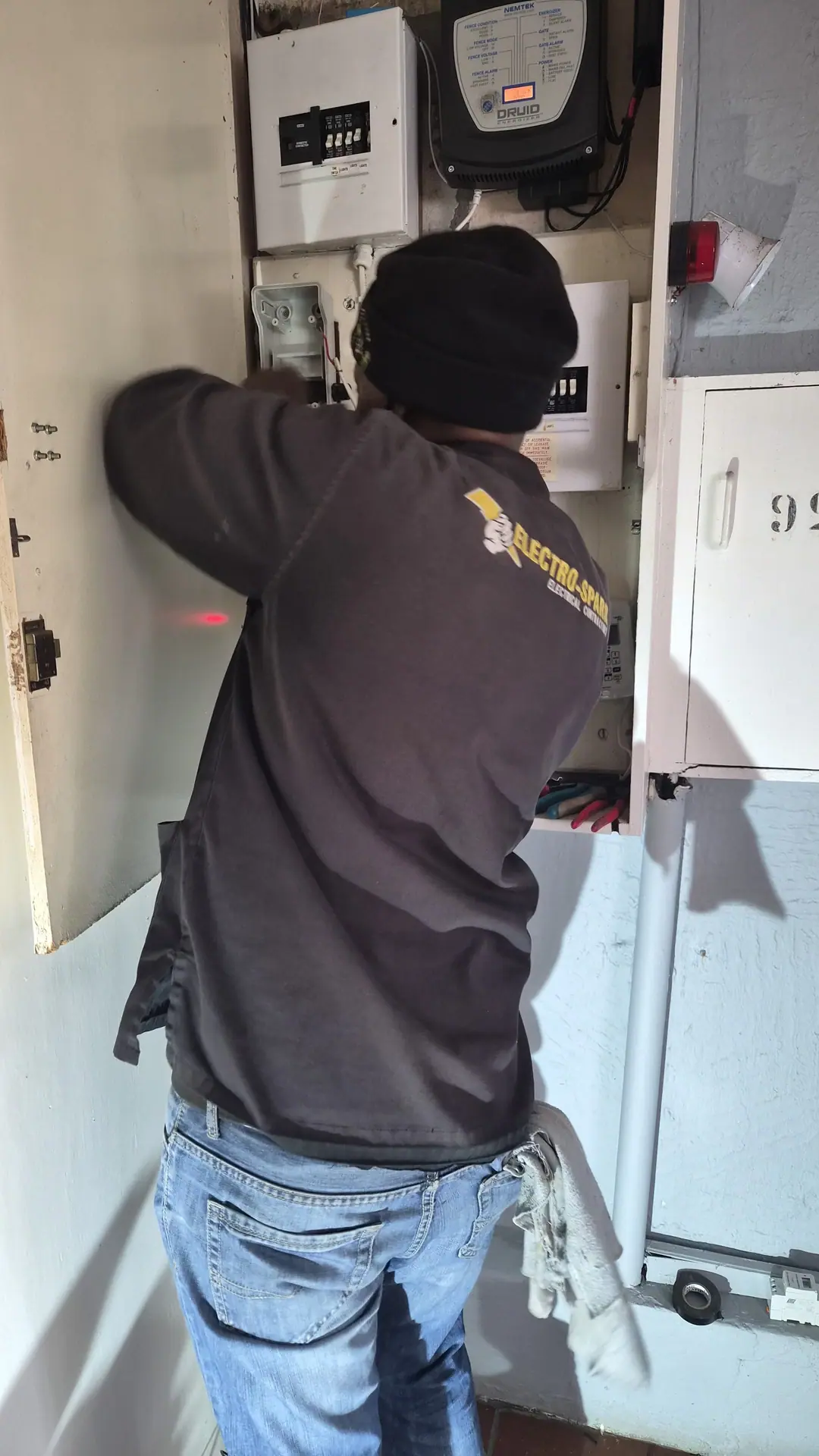
The wiring code requires the isolating switch for a stove, oven or hob to be in the same room, within reach, never fixed to the appliance itself, and preferably not above it. Every cooking appliance has one, usually a large switch on the kitchen wall, and its position means you never have to reach across hot plates or a pan fire to switch the stove off.
Isolators carry a heavy current and wear over time. A switch that is warm to the touch, discoloured or crackles when used needs replacing. It is an inexpensive part, and a worn isolator is a common reason for a stove cutting out part way through cooking.
Connecting a new hob or built-in oven
Cooking appliances rated above 16 A must be on a dedicated circuit, and one circuit may feed more than one cooking appliance only when they are in the same room. Replacing a freestanding stove with a separate hob and built-in oven usually means new wiring from the isolator to two positions. If the new pair draws more than the old stove, the breaker and cable may need to be increased in size.
Check the rating plate or installation manual before you buy, and send us the model. Some hobs are supplied without a supply cable, and some need a larger circuit than the stove they replace. Knowing this before delivery avoids a kitchen standing unusable while the circuit is upgraded.
Why does an appliance trip the earth leakage?
In most cases an element inside the appliance is leaking current to earth. A stove or oven that trips the earth leakage as it switches on usually has a faulty element. An oven element that has not been used for a while can absorb moisture and trip on the first heat-up. If it trips every time, the element is breaking down and needs replacing.
The same applies to kettles, washing machines, dishwashers and heaters. To identify the appliance, unplug everything on the circuit, reset the earth leakage and reconnect items one at a time. The one that trips it is the source. If it still trips with nothing plugged in, the fault is in the wiring, and fault finding is the next step.
When is a stove repair not worth it?
A repair stops being worthwhile when the part costs a large share of a new appliance, when several parts are failing at once, when the wiring inside the stove is heat-damaged, or when the part is no longer available. Otherwise, a plate, element, thermostat or isolator is usually worth replacing on a stove in good condition. We will tell you plainly rather than fit a part that lasts only a few months.
For small plug-in appliances such as kettles, toasters and microwaves, repair is rarely economical. What matters there is whether the fault lies in the appliance or in your installation, so that a new appliance does not trip on the same faulty circuit a week later.