

Electro-Spark carries out partial and full house rewiring in Cape Town. A rewire is needed when cable insulation has perished, circuits have no earth or joints overheat, which is common in older houses. We test before recommending anything, replace only what has failed where the rest is sound, and certify the new work with a CoC.
How can I tell if my house needs rewiring?
The signs are in the cable itself. Older houses, of the kind found across the Southern Suburbs and the City Bowl, can still have their original cabling, so look for the following.
- Rubber-insulated cable (often called VIR) that is brittle, cracked or crumbles when it is moved. It is common in the roof space of older houses.
- No earth: two-core cable, light fittings with nowhere to connect an earth, or plugs that were never earthed.
- Aluminium conductors in places they should not be. Aluminium loosens and oxidises at its terminals, and those joints run hot.
- Scorch marks at plugs and switches, lights that dim when something else switches on, or cable held together with insulation tape.
Do I need a partial or a full rewire?
It depends on how widespread the problem is, and not every house needs everything replaced. If one circuit has perished cable in a hot roof and the rest is sound, we replace that circuit. If an extension was wired properly 15 years ago but the original house was not, we rewire the old part and leave the new.
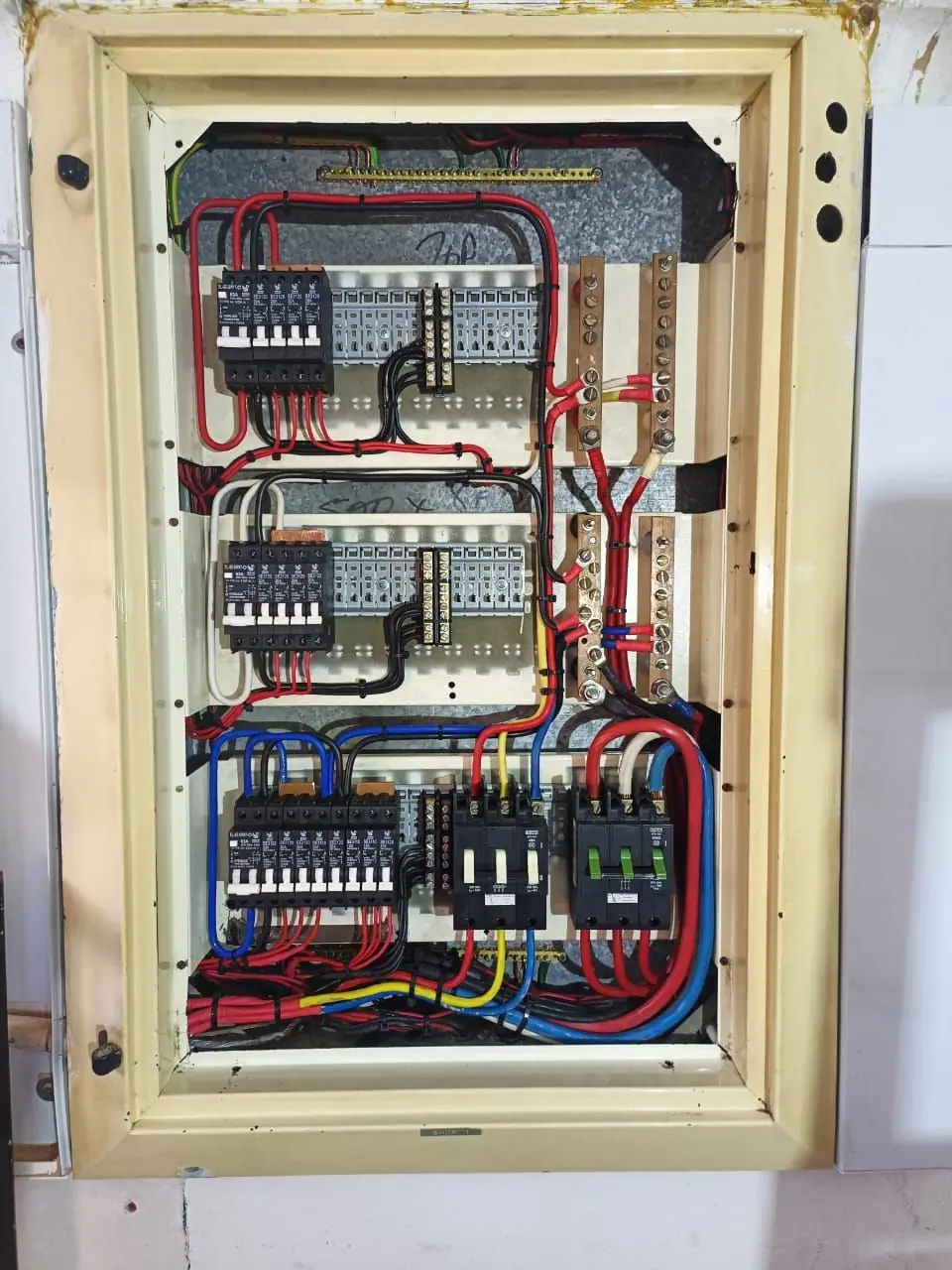
A full rewire makes sense when the fault is everywhere: perished insulation in every room, no earth anywhere, or a history of piecemeal additions nobody can trace. It is usually done together with a new DB board. We test before we recommend either, and show you what we found.
Much of the work in a rewire is access: getting into walls, ceilings and the roof space. If you are renovating room by room, rewiring each room as it is opened up spreads the work and avoids chasing walls twice.
What does a rewire include?
A rewire replaces more than cable. Every circuit receives new conductors sized for its load, with an earth run to every plug, light and fixed appliance. Worn plugs and switches are replaced, the geyser and metal pipes are bonded, and the circuits are brought into a board with earth leakage protection.
It is also the right time to improve the layout. If the kitchen needs more plugs, the oven needs its own circuit or the essential loads need separating for a future inverter, that is less costly to do during a rewire than afterwards.
Chasing walls and making good
In most South African brick houses, the wiring runs in conduit buried in the walls. If the conduit is intact, we can often draw the old cable out and pull new cable through without breaking any plaster. Where the conduit is blocked, damaged or missing, a new channel is cut (chased) into the wall, the conduit is laid in and the chase is plastered back.
Chased walls are plastered flush, but fresh plaster needs painting. Agree at the outset who will do the painting, so that no room is left unfinished.
Can I stay in the house during a rewire?
Usually, yes. We work a circuit or a room at a time, so part of the house is without power during the day and the rest keeps running. Where possible, circuits are restored by the end of each day.
Expect dust where walls are chased, and some furniture moved away from walls. Tell us about anything that has to keep running (a fridge, medical equipment, a home office), and we will plan around it.
Ceiling lights are usually rewired from the roof space, so we need access through the ceiling hatch. In houses with little or no roof space, such as some flat-roofed extensions, the cable may have to run on the surface in trunking instead, and we agree the route with you first.
Certification when the rewire is complete
New wiring is new work, so it has to be certified. A partial rewire receives a certificate for the circuits replaced. A full rewire is tested and certified as a whole, which also gives you a current CoC if you plan to sell.
Keep the certificate and its test report with the house papers. At transfer a CoC older than two years is not accepted, but for everyday occupation it remains valid until the installation is changed again, and your insurer may ask to see it after a claim.