

Electro-Spark repairs the electrical side of geysers in Cape Town homes: elements, thermostats, isolators, wiring and earth leakage trips. Each part is tested before anything is replaced, so only the failed component is changed. We also install geyser timers on the DB board, so the geyser heats before hot water is needed and stays off otherwise.
What usually fails when a geyser gives no hot water?
Three faults account for most geyser problems: a burnt-out element, a failed thermostat, or a tripped safety cut-out on the thermostat. With no hot water at all and nothing tripped on the board, the element or the thermostat is the likely cause. Lukewarm water can come from a thermostat that is failing or set too low, an element coated in scale, or a plumbing fault where hot and cold water are mixing at a valve.
We test before replacing anything: the element's resistance, its insulation to earth, and whether the thermostat switches. Replacing a sound element when the thermostat was at fault is a common and avoidable expense. Most geyser thermostats also have a safety cut-out that trips if the water overheats. If it trips more than once, the thermostat is not switching off, and resetting the cut-out without replacing the thermostat only repeats the fault.
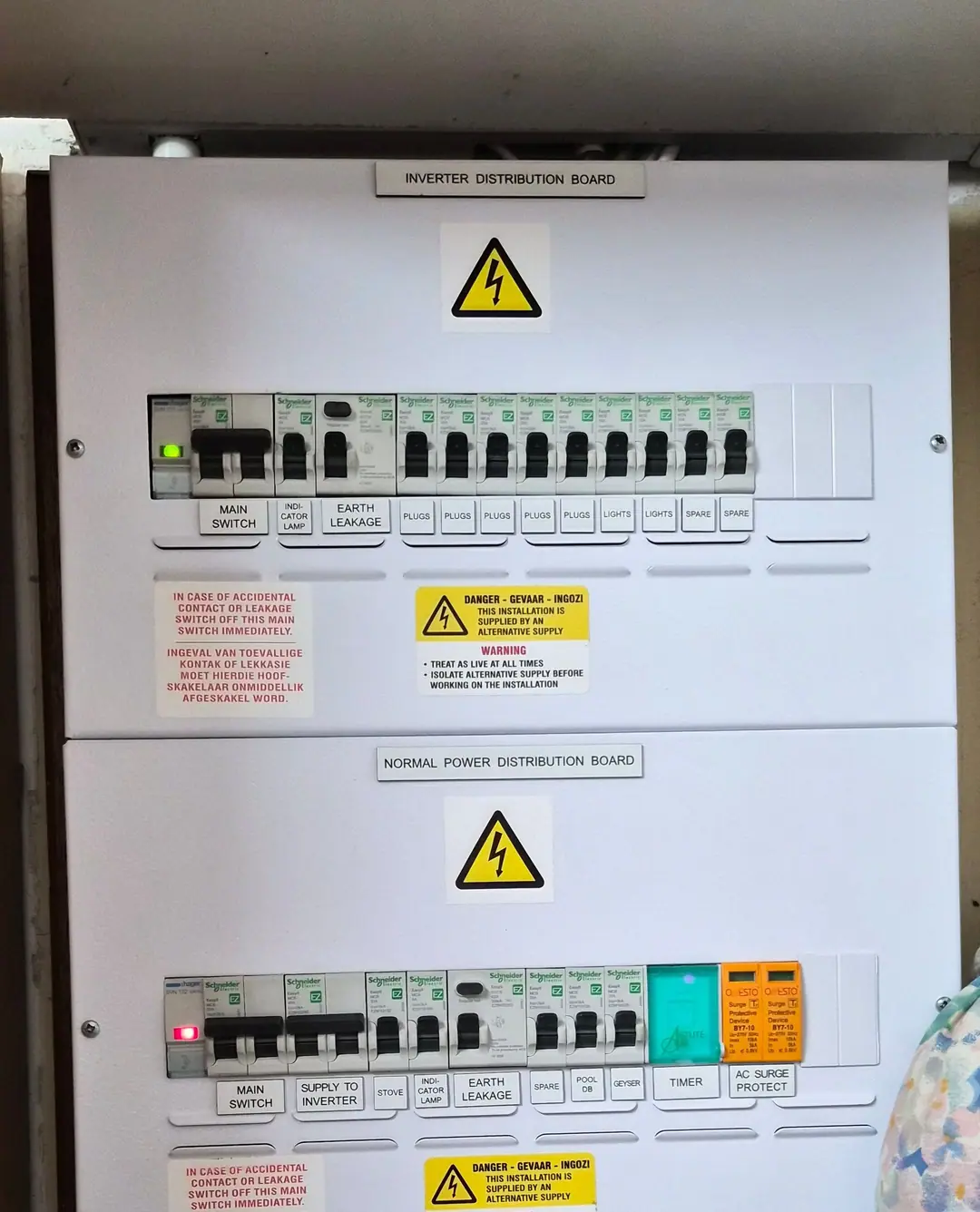
Why does a geyser trip the earth leakage?
A geyser trips the earth leakage when the metal sheath around its element cracks or corrodes, allowing current to leak into the water and to earth. Geyser circuits must be protected by earth leakage rated at no more than 30 mA. The fault often appears when the geyser switches on first thing in the morning, and if the geyser shares the main earth leakage, the whole house loses power with it.
A simple test shows whether the geyser is responsible. Switch off the geyser breaker, or the isolator, and reset the earth leakage. If it holds, the geyser is the place to start. If it still trips, the fault lies elsewhere, and fault finding is the next step.
The geyser isolator
Most geysers have an isolator switch nearby, often in the roof space, in addition to a breaker on the DB board. The isolator allows the geyser to be made dead at the point where it is being worked on, so that nobody in the house can switch it back on at the board during the work.
Isolators in hot roof spaces deteriorate over time. A scorched or loose isolator can cause a geyser that works one day and not the next, so we check it whenever the geyser is opened up.
How much does a geyser timer save?
The saving depends on how your household uses hot water, because it comes from fewer hours spent keeping a full tank at temperature. A geyser left on keeps the tank hot around the clock, and a hot tank loses heat continuously. A timer makes it heat before hot water is needed and stay off for the rest of the day. A household that showers in the morning and evening benefits more than one that uses hot water throughout the day.
Set the thermostat to about 60°C. A lower setting costs less to run, but water held at lower temperatures can grow Legionella bacteria, and heating to 60°C for an hour a day keeps that in check.
The timer is fitted on the geyser circuit in the DB board. A simple timer is sufficient. A smart controller adds control from your phone and shows what the geyser actually uses, which is useful if you want to see where the electricity bill goes.
Why the geyser usually stays off the inverter
In a backup installation the geyser is normally kept on the normal-power side of the board, off the inverter. A geyser element draws several kilowatts for an hour or more at a time, which would take up most of a typical home inverter's output and drain the battery quickly. During an outage the geyser waits for the grid, and a full tank of hot water retains its heat for some time.
If you have solar panels, daytime surplus can be directed to the geyser, but that is a design decision for the solar system and separate from putting the geyser on backup. See inverter and battery backup.
When is a geyser fault a plumbing problem?
Water through the ceiling, a burst geyser, an overflow pipe that keeps running, a pressure valve that will not stop discharging or a leaking drip tray are plumbing faults. Switch the geyser off at the board or the isolator, close the cold water supply to the geyser, and call a plumber. If you intend to claim on insurance, speak to your insurer before anyone replaces the geyser.
The electrical side covers the element, thermostat, isolator, wiring, breaker, earth leakage and timer. A burst geyser often needs both trades: the plumber replaces the cylinder, and the electrical connection should be checked before it is switched back on, because water has usually passed through the isolator and wiring in the ceiling.