

Electro-Spark is an electrical contractor and solar installer serving Cape Town's Atlantic Seaboard and City Bowl, from Sea Point, Green Point and Camps Bay to Gardens, Tamboerskloof and Vredehoek. We install backup power inside apartments, issue compliance certificates for unit sales, upgrade older wiring, and plan solar on freestanding houses for the salt air and steep sites.
Electrical and solar work on the Atlantic Seaboard and in the City Bowl
We work in Sea Point, Green Point, Camps Bay, Fresnaye, Gardens, Tamboerskloof, Oranjezicht and Vredehoek. We are based in Table View and cover the whole of Cape Town. The business is owner run, and the owner supervises the work.
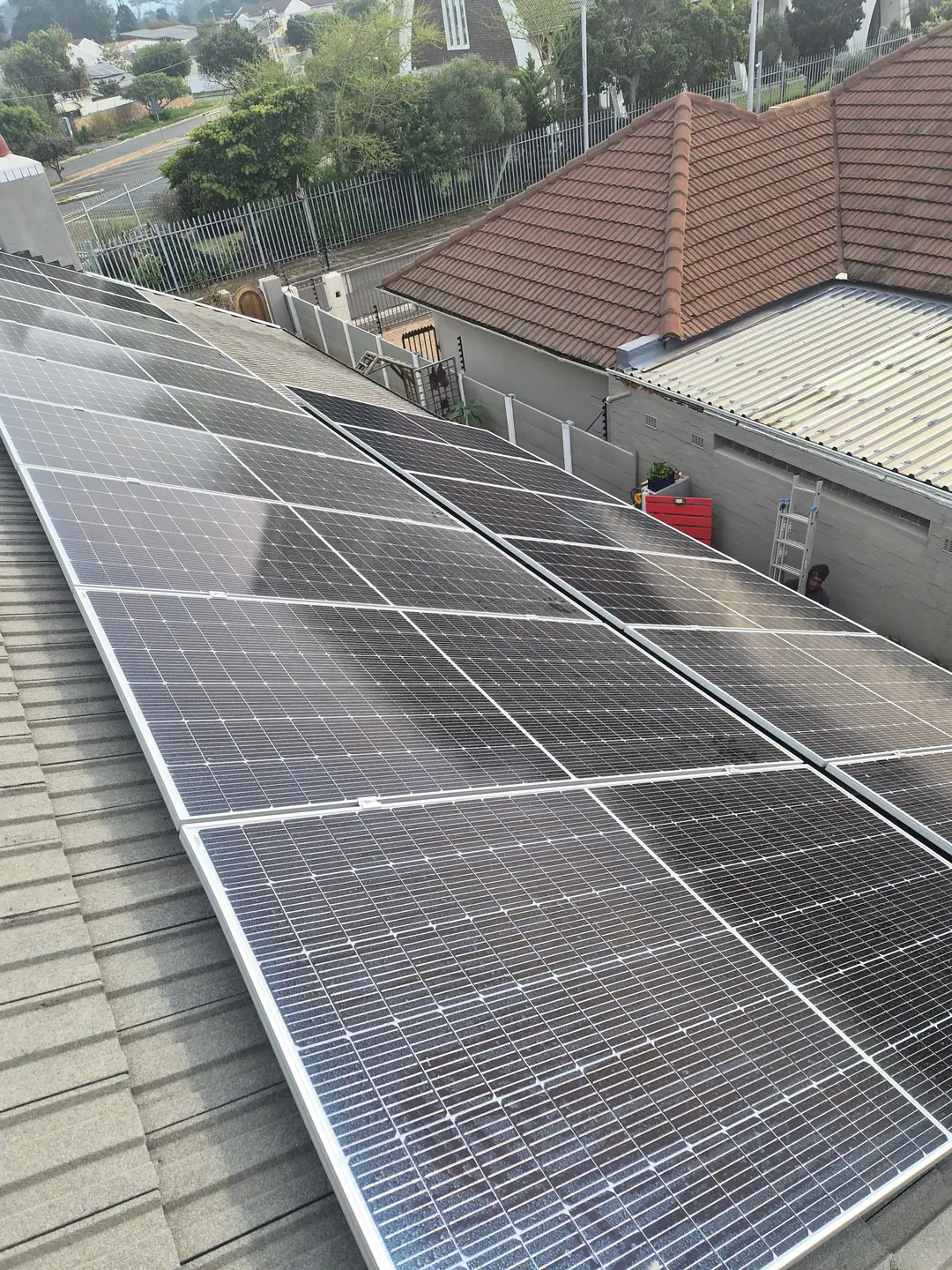
Much of the work here is in apartments and older buildings: compliance certificates for sales, DB board upgrades, lights and plug points, and inverter and battery backup that has to fit within a flat. On the freestanding houses on the slopes, home solar is often part of the work, designed for the salt and wind of the Atlantic side.
Which parts of an apartment's electrical installation are yours?
In a sectional title building, your part of the electrical installation usually starts at the DB board inside your unit. The supply to the building, the meter room, the risers and anything on the roof or in the passages is normally common property, managed by the body corporate.
This affects three kinds of work. A CoC for a unit being sold covers the installation in your section, from your board onward. Backup power has to fit inside the unit: an inverter and lithium battery can be wall-mounted in a cupboard or scullery, provided there is ventilation and clearance, whereas a generator on a balcony is usually against the scheme's rules and unsuitable in any case. Anything that touches common property, including panels on the roof or new cables through a shared passage, needs the trustees' consent.
How do you get body corporate approval for solar or backup?
You need the trustees' written consent, because the roof of a block of flats is common property, and larger changes can require a resolution of the owners. Many schemes now have a solar or backup policy that sets the conditions.
Trustees and managing agents generally ask for the same information: what is being installed, where it will be mounted, how the cables will run through common areas, how the battery is protected, and confirmation that the work will be certified afterwards. Having this in writing before the trustees meet saves a round of questions.
Buildings also need backup of their own. When the power goes, residents notice the lift, the water booster pump, the gate motor and the passage lights before anything else. Backing these up is a body corporate decision, paid from the building's funds, and it is usually the first project to plan before individual owners add their own systems.
For a whole building considering shared solar or backup, see body corporate solar. Managing agents responsible for several blocks can start at property managers.
Salt air from Sea Point to Camps Bay
Buildings along the Sea Point, Green Point and Camps Bay beachfront are exposed to salt spray. It corrodes outdoor fittings, isolators, fixings and connections, and a corroded connection runs hot. Outdoor lights and plugs on balconies and terraces here need weather-rated fittings with sealed entries.
On a solar installation near the sea we use stainless or coated fixings, keep the inverter and battery indoors or under cover, and use matched DC connectors crimped with the correct tool. Existing systems close to the water benefit from a periodic solar maintenance check before corrosion causes a fault.
Steep sites and access
Tamboerskloof, Oranjezicht, Vredehoek, Fresnaye and the slopes above Camps Bay have some of the steepest residential streets in Cape Town, and access shapes the job. A lithium battery is heavy and panels are awkward to carry, so moving either up a long flight of stairs or across a sloping garden takes planning. Ladders and roof access on a slope need care, and some roofs can only be reached safely with scaffolding.
The south-easter also pours over the mountain into the City Bowl, often in strong gusts. Panels on exposed roofs need the same attention to fixing into the rafters and keeping back from roof edges that we give coastal installations.
When you contact us, include details of access: parking, stairs, how the roof is reached and whether there is a lift. This helps us plan the visit.
Older buildings in Gardens and Tamboerskloof
Gardens, Tamboerskloof and Oranjezicht have many older houses and blocks, and some fall within heritage protection overlay zones. Any building older than 60 years is protected under the National Heritage Resources Act, and changes to its appearance, such as panels on a street-facing roof, can require approval.
Older buildings can also have old wiring: rubber-insulated cable, no earth leakage protection, and boards that have been extended over decades. This usually comes to light when a flat or house is sold and needs a CoC. The remedy may be a DB board upgrade, a partial rewire, or both. In solid plaster walls we plan cable routes to avoid unnecessary chasing, which matters more in an older building.