
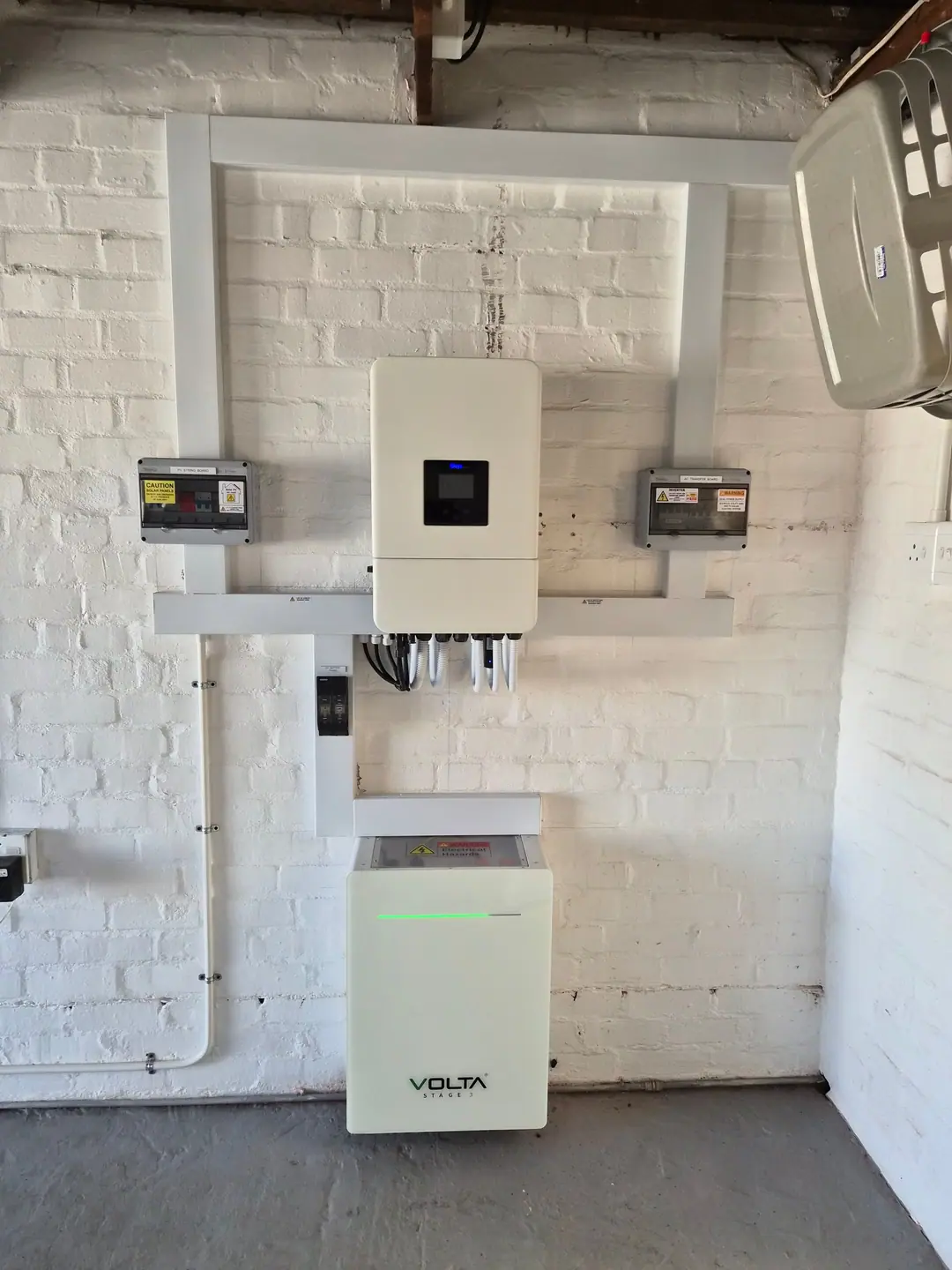
Every solar PV, hybrid inverter and battery backup system connected to the City of Cape Town's supply must be authorised as a small-scale embedded generation (SSEG) system, using an inverter on the City's approved list. Electro-Spark installs to the City's requirements, explains what the application needs, and supplies the certificate of compliance the City asks for.
Do I need to register my solar system in Cape Town?
Yes. The City of Cape Town requires anyone installing a small-scale embedded generation (SSEG) system to apply for authorisation. SSEG means any generator connected to the electrical installation of a property that is also on the grid. In practice that means rooftop solar panels, hybrid inverters and battery backup systems.
That includes systems that never send power back to the grid, and inverter and battery systems with no panels at all, because the inverter is still connected to your supply. Since 1 October 2023 the City has treated all new solar PV and battery applications as grid-tied and no longer accepts new applications for standby or off-grid systems.
The rules apply to systems installed before you owned the property as well. If you bought a house with solar already on it, confirm that it was registered.
What happens if a solar system is not registered?
The City can issue a contravention notice to a property with an unauthorised system. The notice instructs the owner to disconnect the system within five working days, supply a certificate of compliance, and apply for authorisation within a month. Properties that do not comply risk having their electricity supply disconnected. Under the by-law, failing to register a system is an offence.
An unregistered system also causes difficulties when you sell. Buyers and conveyancers increasingly ask for proof of registration, and a problem found late can delay a transfer.
The City's approved inverter list
The City only authorises systems that use an inverter on its approved list. To be listed, an inverter model has to be certified to NRS 097-2-1, the national specification for how inverters behave on the grid, including shutting down when the grid fails so they do not feed power into lines being worked on.
Check the exact model against the current list before you buy. The list is updated, some models appear only in certain versions or ratings, and an imported or second-hand inverter that is not listed cannot be registered, regardless of what the seller says. For a grid-tied system in Cape Town, the inverter has to come from that list. If you already own an inverter and are unsure, the model number is on the label on its side, and it can be checked against the list before any other work is done.
What does an SSEG application need?
An application form describing the system and the inverter, a certificate of compliance for the installation, a signed supplemental contract with the City, and a commissioning report signed off by an ECSA-registered professional once the system is installed. Applications are made to the City online through its e-Services portal, for the property.
We install to the City's requirements, explain what each part of the application needs before work starts, and supply the CoC for the installation, which is issued under the Electrical Installation Regulations and SANS 10142-1-2.
Can I sell surplus solar power back to the City?
Yes, and registration is the first step. A system registered as grid-tied feed-in, with a bi-directional meter the City approves, has its exported energy credited to the municipal account at the City's feed-in tariff. Once that credit regularly covers the whole account, you can apply to the City's Cash for Power programme to have the surplus paid out. Residential customers are paid once a year and commercial customers monthly, above thresholds the City sets.
Tariffs and meter costs change, so check the City's current tariff schedule rather than a figure quoted on a website. For most households, using solar power in the house is worth more than exporting it.
If Eskom supplies your property
Some parts of the metro are supplied directly by Eskom rather than the City. If your electricity account comes from Eskom, your system is registered with Eskom under its own SSEG process, not with the City.