

An electrical maintenance contract with Electro-Spark in Cape Town covers planned visits to offices, shops and warehouses: distribution board inspections, emergency lighting and earth leakage testing, and lighting replacement. Faults are found and repaired at a time that suits the site, and every visit is recorded, giving the business a maintenance history it can show an insurer or auditor.
Why is planned electrical maintenance worth it?
Because most commercial electrical failures develop slowly and can be found before they interrupt the business. Terminations work loose as cables heat and cool every working day. Contactors wear each time they switch. Dust builds up inside boards in warehouses and workshops, and on the Atlantic side salt air reaches outdoor fittings and gland plates. None of this is visible until something trips, melts or stops.
A breakdown costs more than the repair: lost trading, stock at risk in a cold room, idle staff, and a call-out on a day you did not plan for. A maintenance visit finds these faults while they are still minor and repairs them at a time that suits the site.
It is also a legal duty. The Electrical Installation Regulations make the user or lessor of an installation responsible for its safety, safe use and maintenance, and the Occupational Health and Safety Act requires employers to keep the workplace safe. A maintenance record is how you demonstrate that the duty has been met.
What does a DB board inspection check?
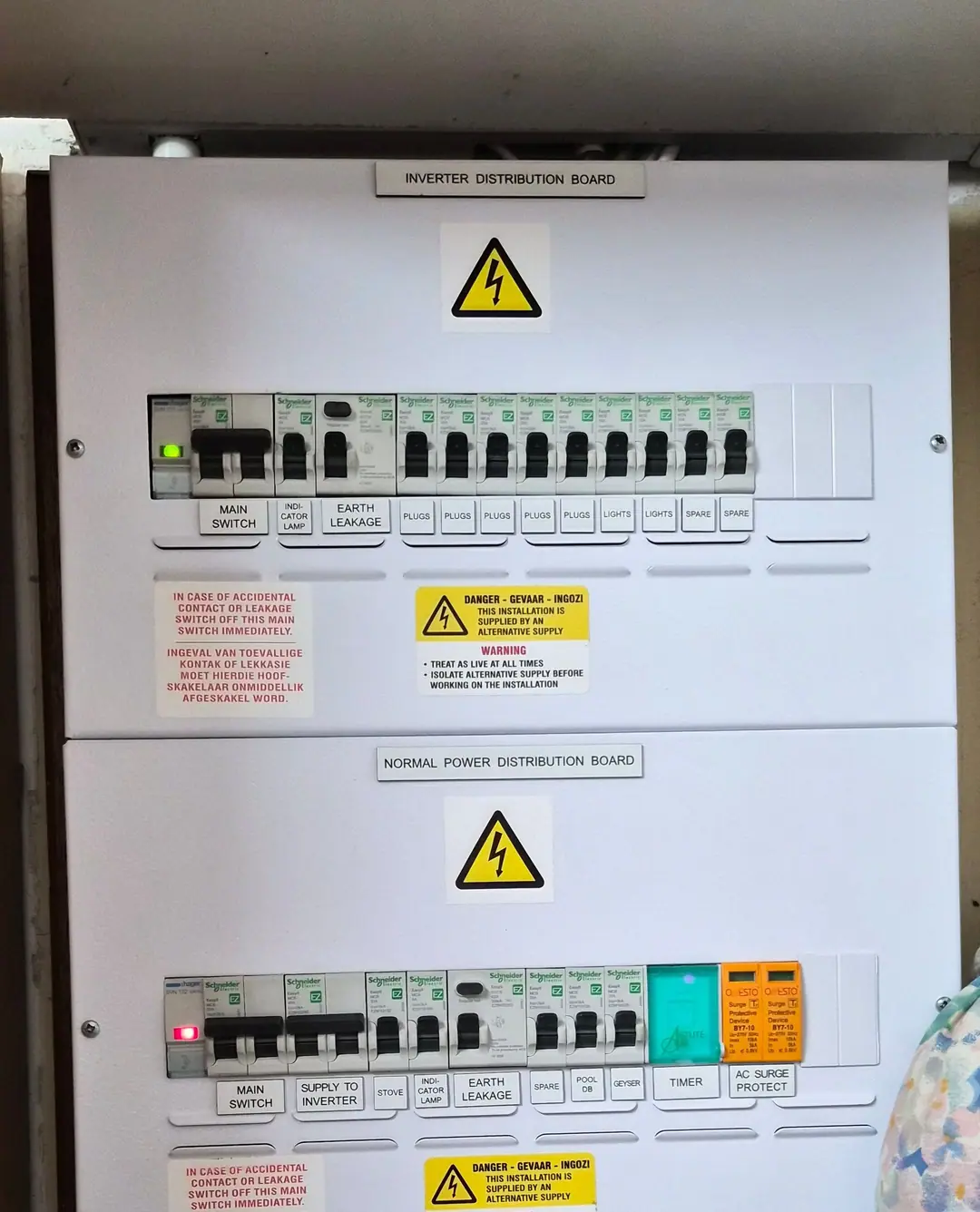
The condition of the distribution boards, which is where most commercial faults show first, so every visit starts there. With the covers off and the board made safe where needed, we check:
- Terminations on breakers, busbars and neutral bars, tightened where they have worked loose.
- Discolouration or melted insulation around a breaker or terminal, which means it has been running hot.
- Covers, blanks and gland plates in place, so no live parts can be touched.
- Labels that match the circuits, including circuits added since the last visit.
- Additions that were never certified, which we list separately so they can be put right.
What does thermographic scanning add?
It shows heat. A thermal camera pointed at a board under normal load picks up a connection running hotter than its neighbours well before that connection fails, often before there is any mark visible to the eye. It is a standard part of maintenance on larger commercial and industrial sites.
A scan is only meaningful while the board is working, so it should be done when the site is busy, not at 07:00 before the equipment is switched on. A hot spot found on a scan is isolated and repaired at a planned time, and the board is scanned again to confirm the repair. If your insurer or landlord requires thermographic reports, raise it at the scoping stage so the maintenance plan accounts for it.
How are emergency lighting and earth leakage units tested?
Emergency lighting is tested by cutting the supply to the fittings and checking that each one lights and lasts its full rated duration. The test button on a fitting is not enough, because the battery loses capacity over the years, and a light that comes on may still go out long before people have left the building. Failed batteries and fittings are replaced and the result is recorded.
The test button on an earth leakage unit proves only that the mechanism moves. It does not show how much leakage current it takes to trip the unit, or how quickly it trips. A proper test establishes both, and units that trip too slowly or not at all are replaced.
The opposite problem is common in offices. Every computer and printer leaks a small current to earth, and a unit that protects too many of them adds that up until it trips without an obvious cause. The remedy is usually to split the circuits, not to fit a less sensitive unit.
Lighting replacement
On a small site, replacing lamps as they fail is reasonable. In a warehouse with high-bay fittings, where every replacement needs a ladder or a lift, replacing a whole area at once is more economical. When older fluorescent fittings are converted to LED, the old control gear must be dealt with properly (bypassed and rewired, or the fitting replaced) rather than left in circuit behind a new tube.
Records you can hand to an auditor or insurer
Every visit is written up: the date, what was inspected and tested, the results, what was found, what was repaired on the day and what still needs attention. Board schedules are updated when circuits change, and any addition or alteration we make comes with its own CoC. When an insurer, a health and safety audit or a buyer asks what has been done on the installation, the answer is on file.