
Electro-Spark is an electrical contractor and solar installer serving Cape Town's Southern Suburbs, including Rondebosch, Claremont, Newlands, Constantia and Wynberg. Much of our work in these suburbs is in older homes: testing and replacing old rubber-insulated wiring, adding earth leakage protection, upgrading DB boards, tracing damp-related trips and designing solar around shade from trees.
Electrical and solar work in the Southern Suburbs
We work across the Southern Suburbs: Rondebosch, Claremont, Newlands, Constantia, Kenilworth, Wynberg, Plumstead and Bergvliet. We are based in Table View and cover the whole of Cape Town. The business is owner run, and the owner supervises the work.
Much of the housing here is older than in the rest of the city, and that shapes the work: rewiring, DB board upgrades, compliance certificates that bring problems to light, and fault finding on circuits that trip when it rains. Solar here raises its own questions, mostly about trees and heritage rules.
Old wiring in older Southern Suburbs homes
Older homes in Rondebosch, Kenilworth, Wynberg and Plumstead may still have their original wiring, or parts of it. The cable to look for is VIR: vulcanised rubber insulation, often with a cloth braid over it. After decades in a warm roof space the rubber hardens and cracks, and it crumbles when the cable is moved. The exposed conductors behind a plug or in a light fitting then present a shock and fire risk.
Other findings in older installations include:
- Rewireable fuses or very old breakers, sometimes with the wrong rating fitted.
- Lighting circuits with no earth conductor at all.
- Joins buried in the roof space with tape and no junction box.
- Extensions and outbuildings fed from whichever circuit was closest.
Why do older DB boards lack earth leakage protection?
Many older boards were installed before earth leakage protection became standard, and some have never had it. An earth leakage unit trips when current leaks to earth, which is what happens when someone touches a live part. The wiring code requires socket outlets to be protected by earth leakage with a trip current of 30 mA, which is low enough to prevent a shock from being fatal.
Adding earth leakage to an old installation often reveals faults that were there all along. The unit trips because a circuit genuinely is leaking, through damp, damaged insulation or a failing appliance. That is the protection working as intended. We trace the leaks before and after fitting it, so you are not left with a board that trips every time it rains.
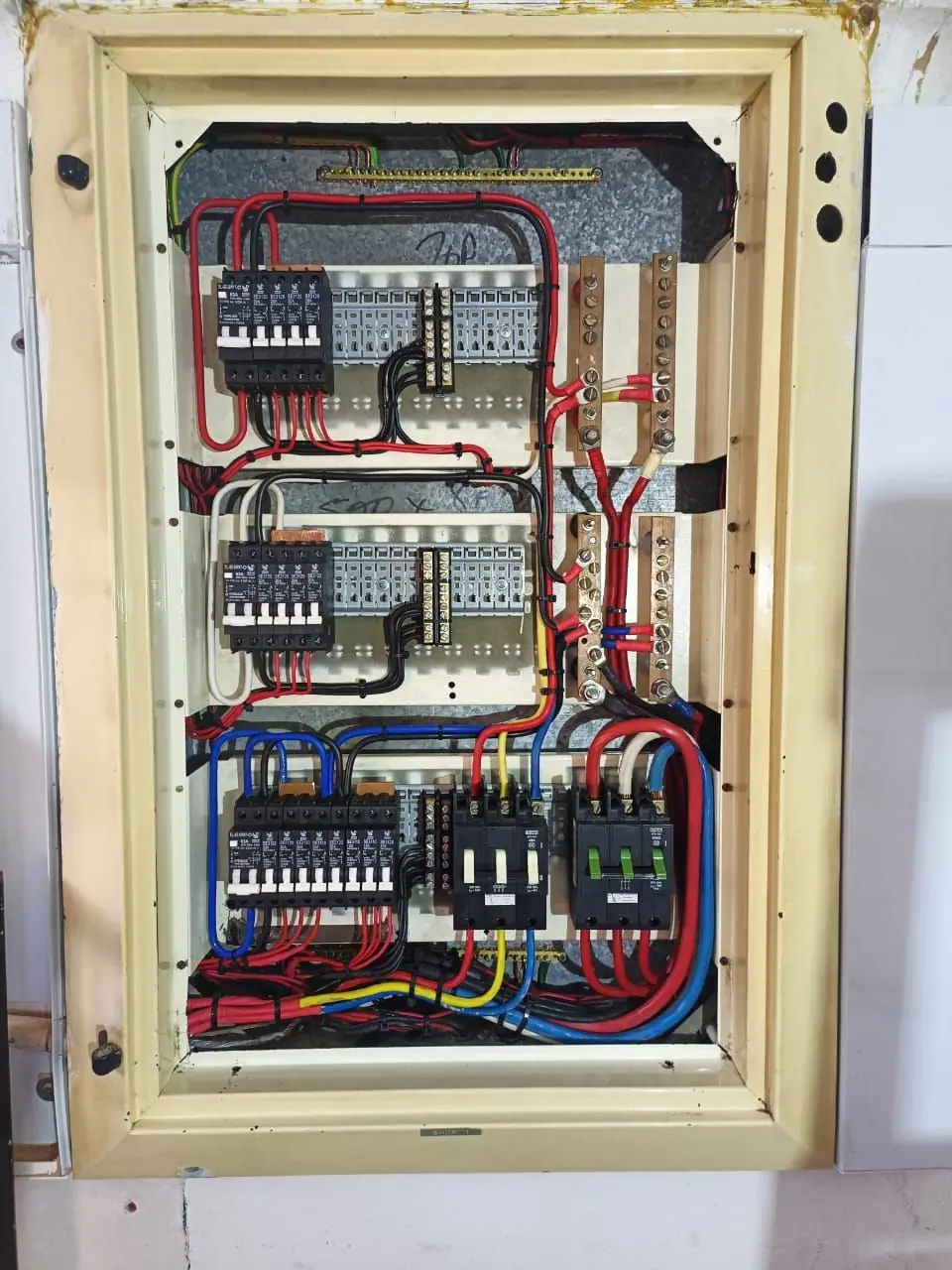
If the board itself is old, a DB board upgrade replaces it with modern breakers and earth leakage. Where the cable is VIR or badly damaged, the circuits need a rewire. We test first and advise which applies.
Heritage homes and visible alterations
Some Southern Suburbs streets fall within the City's heritage protection overlay zones, and any building older than 60 years is protected under the National Heritage Resources Act. Alterations to protected buildings require approval: from the City in an overlay zone, and from Heritage Western Cape for buildings over 60 years old.
Most electrical work inside a house does not change its appearance. Solar panels on a street-facing roof, new external conduit or an inverter on a front wall can. If your house is old or in an overlay zone, check with the City before planning panels on the front. Rear roof slopes and outbuildings often avoid the question altogether.
Does shade from trees rule out solar?
Not always, but it has to be designed for. The oaks and other large trees in Newlands, Constantia and Bergvliet are part of the character of these suburbs, and they present a real challenge for solar. Panels in a string are wired in series, so shade on one panel can reduce the output of the whole string.
We assess shade across the whole year, not only on the day of the visit. The winter sun sits low, so the shadow of a tree or a neighbour's double storey that misses the roof in summer can cover it in June. Depending on the roof, the solution may be splitting the array into separate strings on different MPPT inputs, adding optimisers to the shaded panels, or using east- and west-facing roof faces instead of a single shaded north face.
In some cases a roof is too shaded for panels to pay back, and a battery backup system charged from the grid is the better choice. See inverter and battery backup.
Wet winters and damp
The suburbs on the eastern side of Table Mountain receive far more rain than the rest of Cape Town, and Newlands is often described as the wettest suburb in South Africa. Winter rain finds its way into outdoor plug points, garden lights, gate motors and joins in the roof space.
The typical sign is an earth leakage unit that trips in wet weather and resets once things dry out. That means water is entering something on a circuit. We isolate circuits one at a time to locate it, then seal or replace the fitting. Outdoor work in these suburbs uses weatherproof lights and plug points from the start.
Wet winters also mean fewer sunny days, which matters when sizing a battery for home solar. A system sized only on summer sun will fall short in July.