
Electro-Spark carries out electrical compliance certificate (CoC) inspections for properties in Cape Town. A CoC confirms the fixed wiring met SANS 10142-1 when it was inspected and tested. A property needs a valid CoC before transfer, no older than two years at that date, and any alteration, including an inverter, needs a certificate for the new work.
When do you need an electrical CoC?
Under the Electrical Installation Regulations, 2009, every electrical installation is meant to have a valid certificate of compliance. In practice, most owners need one at three points.
- Selling a property. The seller has to hand over a valid CoC before transfer.
- An insurance claim. After a fire or electrical damage, an insurer may ask for a valid CoC for the property.
- After alterations. New circuits, a new DB board, an inverter or a renovation all need a certificate for the new work.
Is a CoC older than two years valid for a sale?
No. Regulation 7(5) of the Electrical Installation Regulations says the owner may not allow a change of ownership if the certificate of compliance is older than two years. What counts is the age of the certificate at the date of transfer, so a CoC issued 20 months before you list can lapse while the sale is still in progress.
For everyday occupation, a CoC does not expire. It remains valid for the life of the installation unless something is changed, in which case the new work needs a supplementary certificate. The two-year limit applies only when the property changes hands.
If you have a CoC under two years old but have since added plugs, a new board or an inverter, the old certificate no longer describes the house, and a new inspection will be needed.
What does a CoC inspection check?
A CoC inspection combines a visual check of the installation with a set of tests under SANS 10142-1, and the results are recorded on a test report that accompanies the certificate. We open the DB board, examine every accessible point and test the circuits. Keep the test report with the certificate, as it is the record that the tests were carried out.
- The DB board: breakers rated for the cable they protect, earth leakage protection, labelling, the cover and any open holes
- Earthing: the main earth connection and continuity of the earth to plugs, lights and fixed appliances
- Bonding of exposed metal such as the geyser, metal water pipes and, where fitted, a satellite dish
- Socket outlets, light switches and the isolators for fixed appliances like the geyser and stove
- Insulation resistance, earth loop and earth leakage trip tests
What are the most common reasons a house fails a CoC?
The same few faults recur, particularly in older houses and in houses where alterations were made by someone other than an electrician.
- No earth leakage protection, or an earth leakage unit that does not trip when tested
- The geyser and its pipes not bonded to earth
- DB board problems: no cover, missing blanks, unlabelled circuits, or a breaker too large for its cable
- Illegal wiring: extension leads used as permanent wiring, cable joints in the roof with no junction box, and plugs added off a light circuit
- Rewireable fuses, which are difficult to certify because the fuse wire in them is so often the wrong rating
What happens if the installation fails?
If the installation fails, we give you a written list of what failed and why, and a quote to correct it. No work is done without your approval. Once the work is complete, we retest the affected circuits and issue the certificate.
On a sale, arrange the inspection early. Remedial work on an older house can include a new DB board, and that is best resolved before the conveyancer asks for the paperwork.
Does a CoC cover solar, inverters and appliances?
It covers solar and inverter installations but not appliances. The CoC applies to the fixed installation: the board, the wiring, earthing and bonding, plugs, switches and the isolators for fixed appliances. The appliances themselves fall outside it, so a faulty geyser element, stove or pool pump motor is not included.
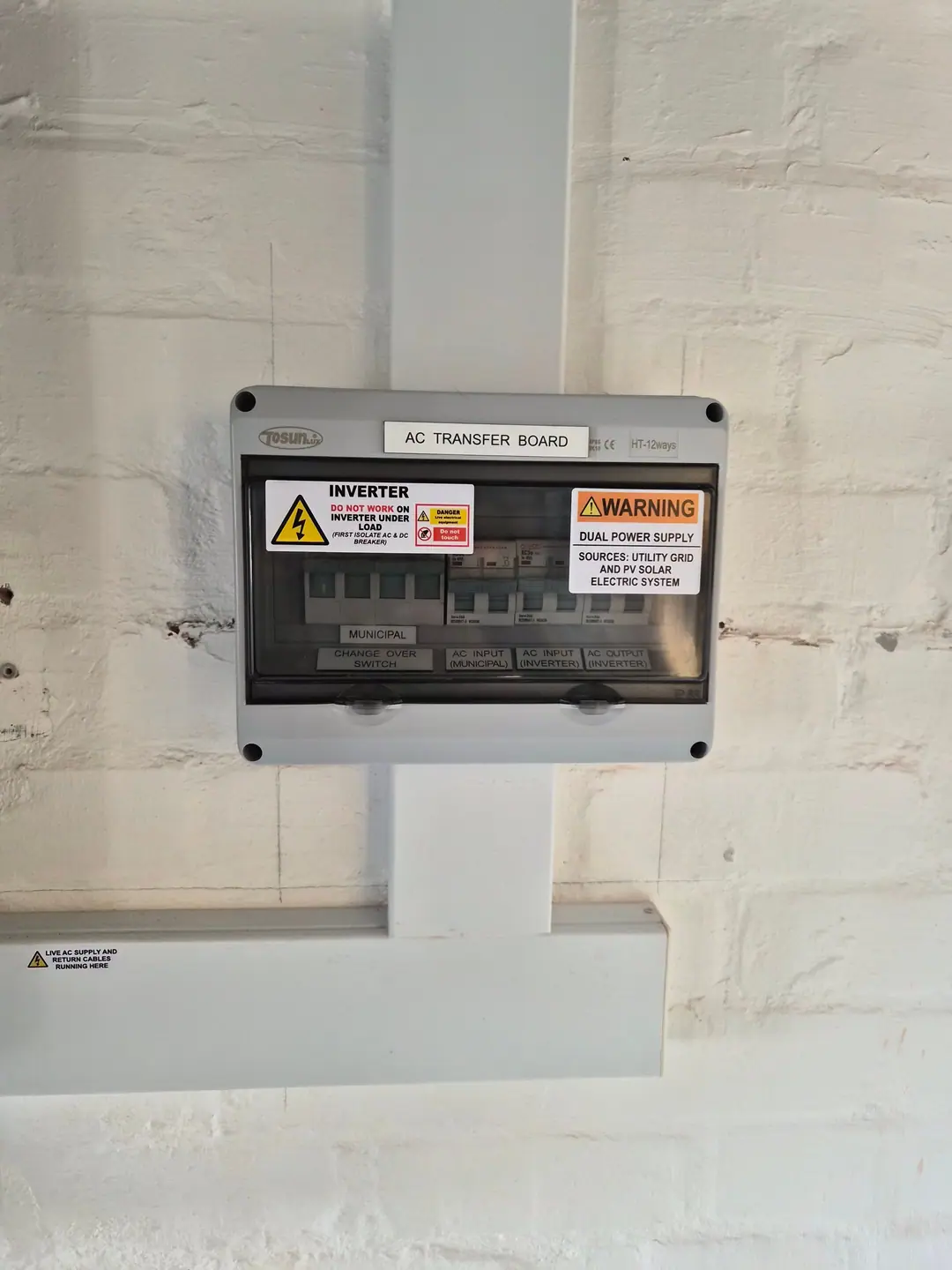
An inverter, battery or solar system is part of the fixed installation, so it has to be on the CoC. The City of Cape Town also requires a certificate of compliance for the installation when registering a grid-capable system. If you are selling a house with an inverter and no certificate covers it, expect the buyer's side to ask for one.