
Electro-Spark installs home solar systems in Cape Town, fixing roof hooks into the rafters and sizing the panels, hybrid inverter and lithium battery to the household's morning and evening use. Work is done to SANS 10142-1-2, each installation receives a certificate of compliance, and the system must be registered with the City using an approved inverter.
How are solar panels fixed to a tiled roof?
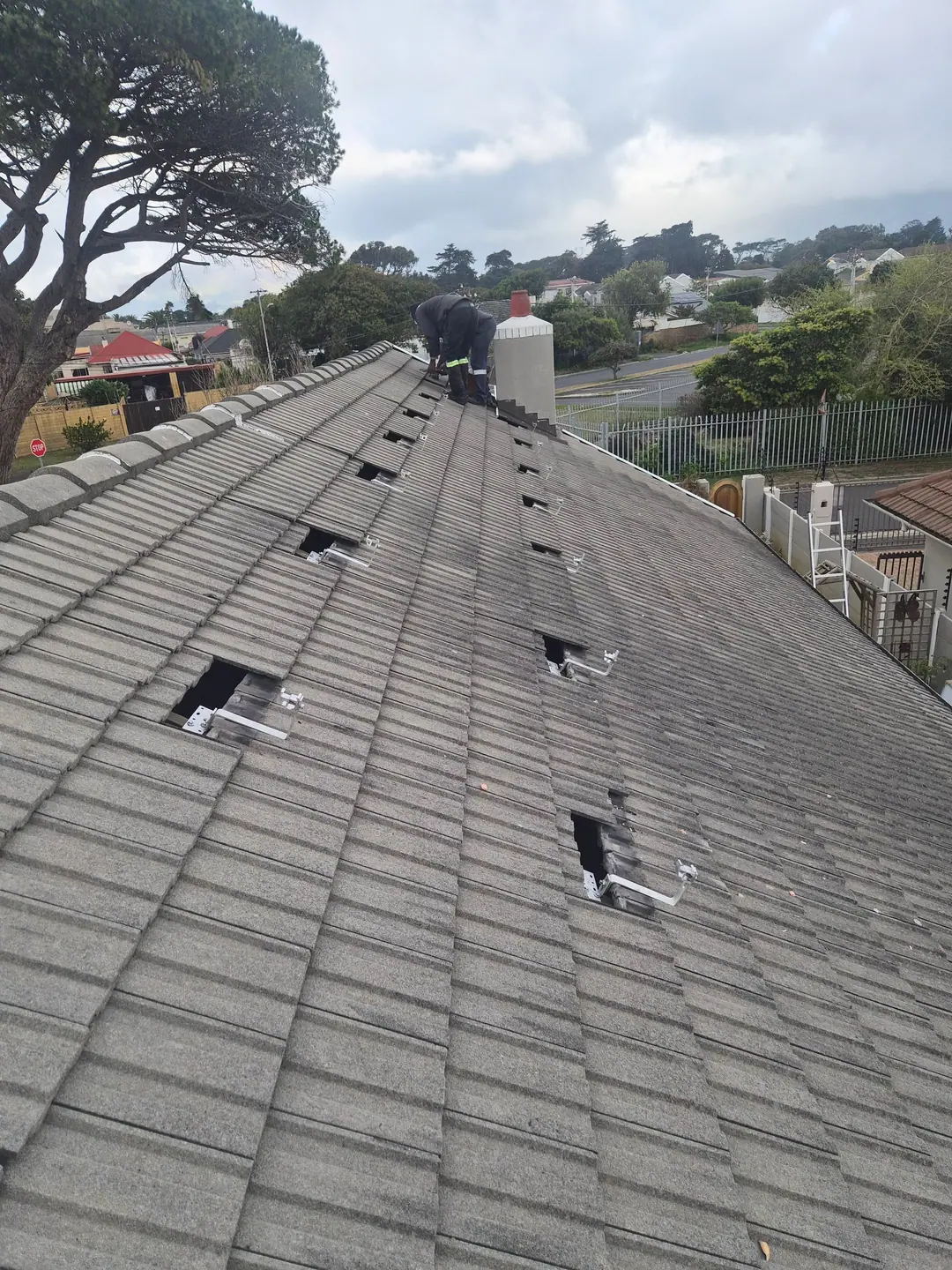
Each hook is screwed into a rafter, the main timber of the roof, rather than into the thinner battens the tiles hang on. Tiles are lifted where each hook goes, and the tile goes back over the hook, sometimes with a notch ground into it so it sits flat. The weight of the array and the pull of the wind are carried by the roof structure.
Rails are then fixed to the hooks and set straight, so the rows of panels sit flush and even along the roofline. The DC cable from the panels is clipped to the rails and run out of the sun where possible, then brought down through the roof in a way that keeps water out.
Sheet-metal roofs (IBR and corrugated) use different brackets that fix through the sheeting into the purlins below. In either case, the question to ask any installer is what the fixings go into.
How big a solar system does a house need?
That depends on how much of your household's use can fall in daylight and how much has to come from a battery after dark. Three numbers describe a home system: the panels in kilowatt-peak (kWp), the inverter in kilowatts (kW), and the battery in kilowatt-hours (kWh). The panels decide how much energy you harvest in a day. The inverter decides how much you can run at the same moment. The battery decides how much of the day's harvest you can use after dark.
Most Cape Town homes use the most power in the early morning and the evening, when panels produce little or nothing. The design question is therefore how much of your use can move into the day (the geyser, the pool pump, the washing) and how much battery you need for the rest. A geyser on a timer that heats in the middle of the day is often the most effective single change in a solar home.
Roof direction, shade and the south-easter
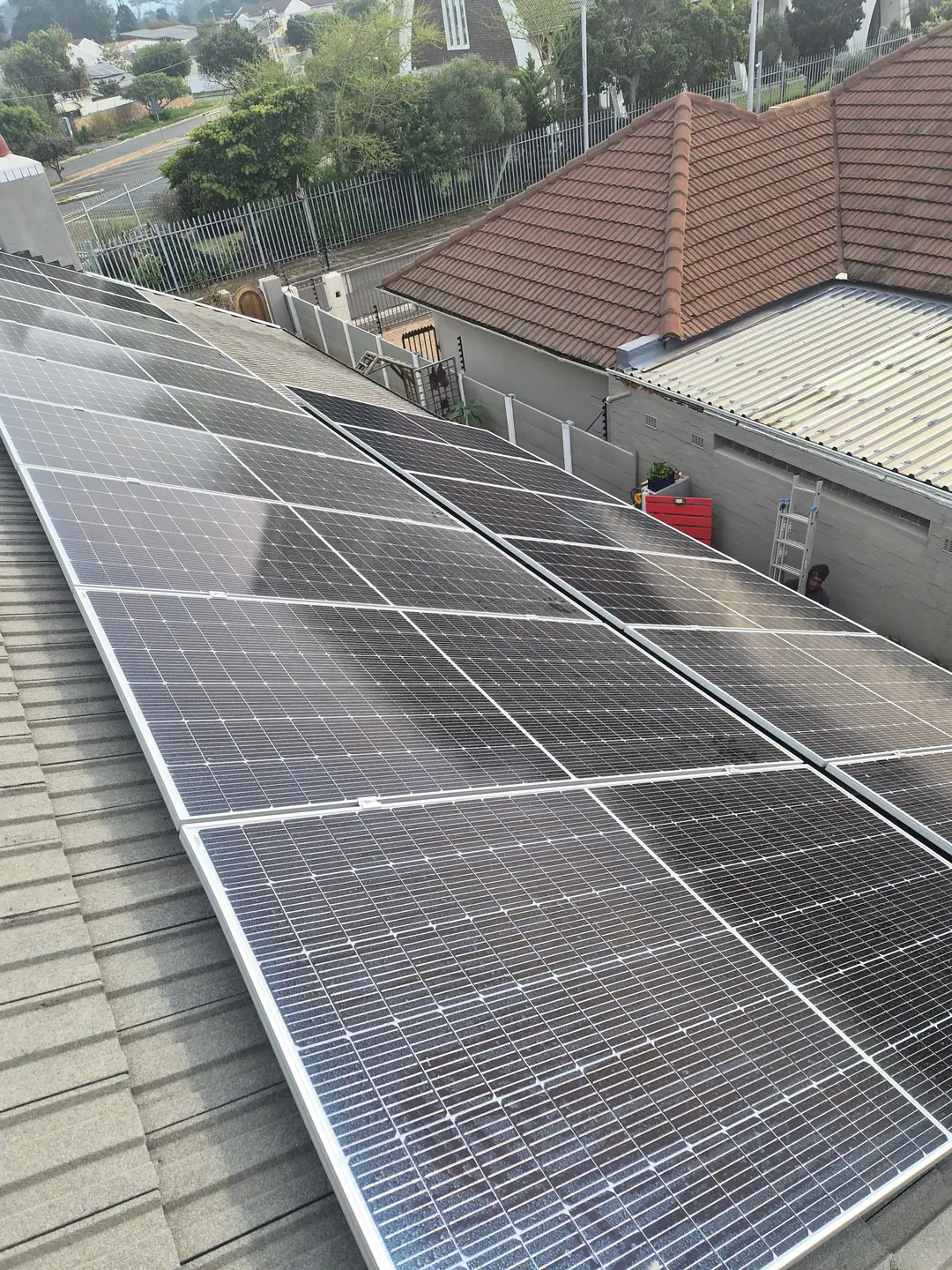
In the southern hemisphere a north-facing roof gives the most energy over a year. East and west roofs still perform well, and an array split across both spreads production across the morning and afternoon, which suits a household that is home at both ends of the day.
Shade has a larger effect than most people expect. Panels are wired in strings, and one shaded panel from a chimney, a tree or a neighbour's second storey can reduce the output of the whole string. We assess where shadows fall in winter, when the sun is low, before deciding where panels go and how they are strung.
Cape Town's south-easter places significant load on an array, especially near roof edges and ridges. That is a further reason every hook goes into the structure and the rail spans follow the mounting system's own limits.
Where should the inverter and battery go?
Somewhere cool, because inverters and lithium batteries last longer at lower temperatures. A garage wall, a covered outside wall out of direct afternoon sun, or a utility room with airflow are all suitable. A cupboard with no ventilation, or a bedroom, is not. The inverter also needs clearance around it for its fans, and it should be where you can see its display.
On the installation in our photos, the inverter, battery, PV string board and AC transfer board sit on one wall joined by square trunking, with every breaker and isolator labelled. Anyone who opens it later, whether another electrician, an inspector or your insurer's assessor, can see what was done.
The paperwork that comes with a home system
A solar installation is part of your fixed electrical installation, so it needs a certificate of compliance under the Electrical Installation Regulations. We supply the CoC for the work we install.
The system also has to be registered with the City of Cape Town, using an inverter from the City's approved list. SSEG registration explains what the application needs. If your existing CoC predates the solar, it no longer describes your installation, which matters when you sell. See electrical compliance certificates.