
Electro-Spark is an electrical contractor in Cape Town that designs and installs rooftop solar panels, hybrid inverters and lithium battery backup for homes, businesses and body corporates. Each system is sized to the property's daytime and evening use, installed to SANS 10142-1-2 and the City of Cape Town's SSEG requirements, and supplied with a certificate of compliance.
What a solar installation is made of
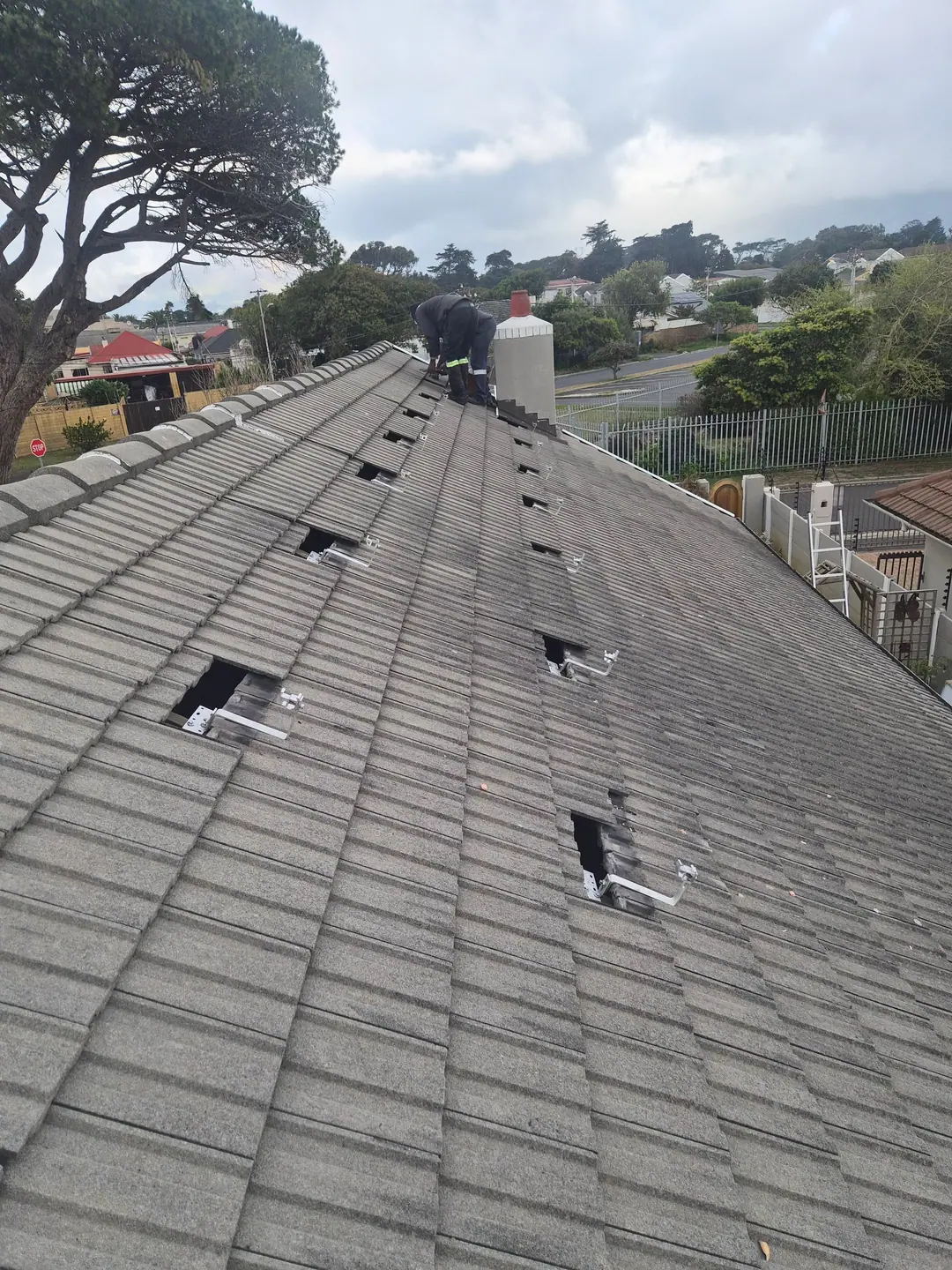
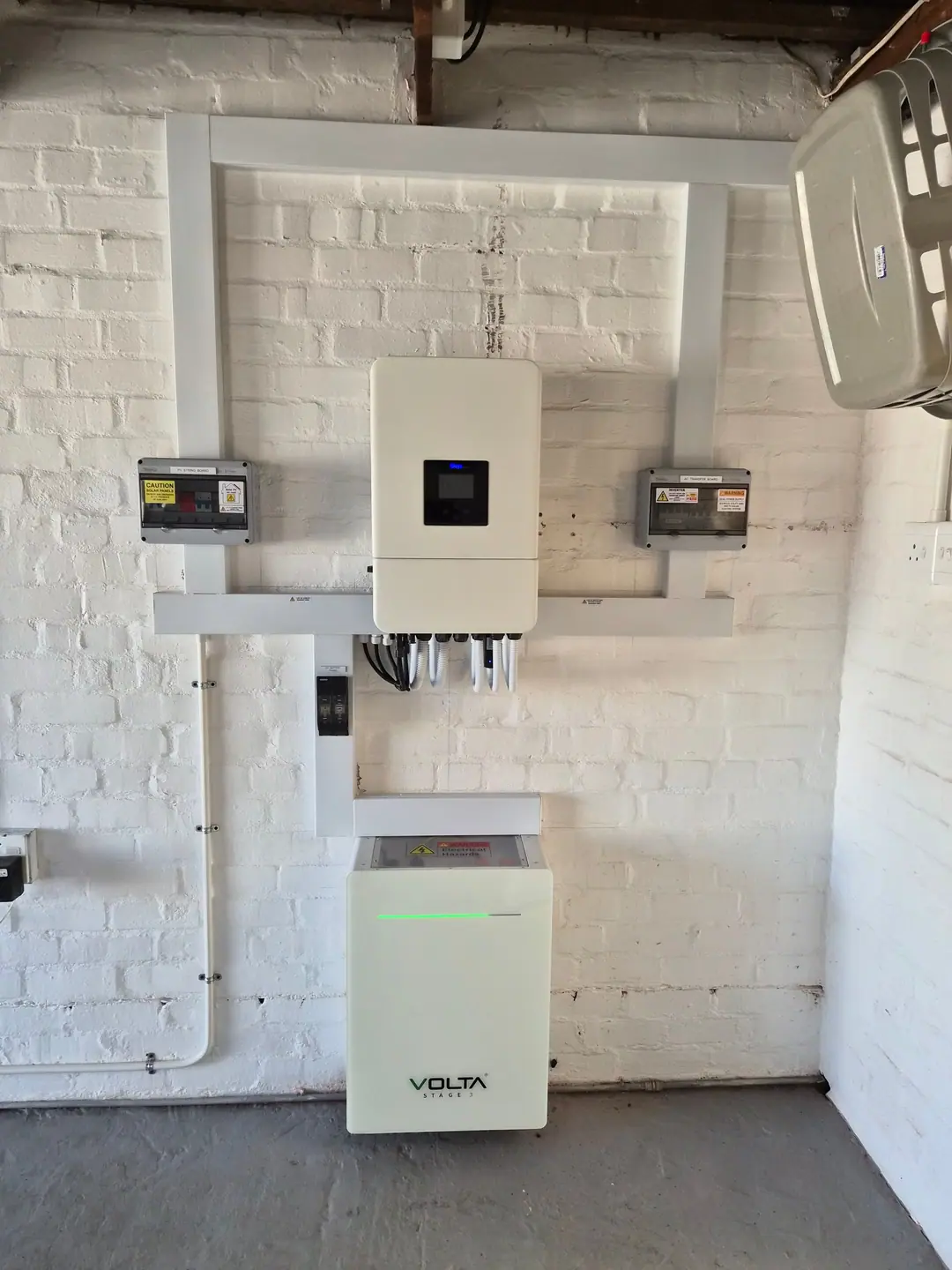
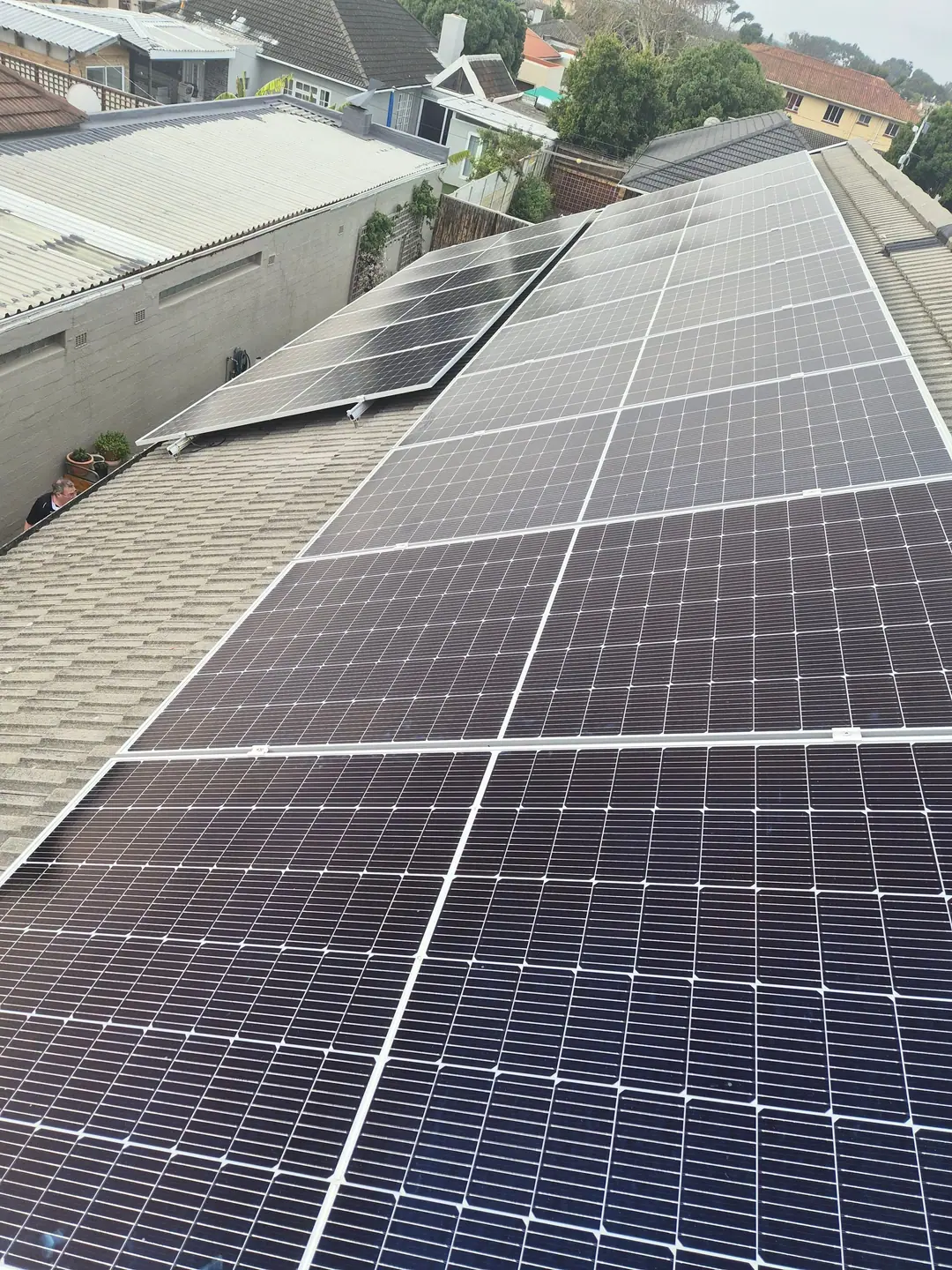
On the roof: hooks fixed to the rafters or purlins, aluminium rails, the panels, and the DC cable that brings their power down. On the wall: a PV string board with an isolator, fuses and surge protection for each string, the inverter, the battery if there is one, and an AC board that connects the inverter to your house or building.
The panels receive most of the attention, but most of what goes wrong with solar in later years happens in the parts nobody inspects on the day the system is switched on. A hook screwed into a batten instead of a rafter. A DC cable chafing across a tile edge in the south-easter. A string board with no labels, so nobody can tell which isolator does what when something needs to be made safe.
The standard that governs this work is SANS 10142-1-2, which adds the requirements for embedded generation (solar, batteries and inverters connected to the grid) to the normal wiring code. It covers earthing, cable sizing, fusing, signage and the wind loads on the roof.
How is a solar system sized?
A solar system is sized from how and when you use electricity, not from the size of the roof. We begin with your electricity accounts and a discussion of how the property is used through the day. When is the house or business using power? What has to keep running when the grid goes down, and for how long? A household that is empty all day and busy every evening needs a different system from an office that runs its air conditioning from eight to five.
Panels produce in daylight. Anything you can move into daylight hours, such as a geyser on a timer, a pool pump or a dishwasher, uses solar directly and costs nothing extra to store. Anything that has to run at night comes from a battery, and batteries are usually the most expensive part of the system. Getting that balance right matters more than the brand of panel on the roof.
The solar work we do
For houses, home solar covers the roof, the inverter and batteries, and how to size a system for a household that is mostly empty during the day.
For offices, shops, warehouses and workshops, commercial solar is sized against the daytime load, usually on a three-phase supply, and includes an outline of the Section 12B allowance for your accountant.
If load-shedding or outages are the main reason you are considering a system, inverters and battery backup explains how a split essential-loads board lets a smaller battery last longer.
Trustees and managing agents should start with solar for body corporates and estates, which covers common property loads such as gates, pumps and lifts, and the approvals a scheme needs.
Every grid-connected system in the City's supply area has to be registered. SSEG registration explains what that involves and what to do about a system that was never registered. If you already have solar that is underperforming or showing faults, see solar maintenance and repairs.
Does a solar system need to be registered with the City of Cape Town?
Yes. The City of Cape Town requires every small-scale embedded generation system to be authorised, including hybrid inverters with batteries that never send power back to the grid. Since 1 October 2023 the City has treated all new solar PV and battery applications as grid-tied, and the inverter must be on the City's approved list.
That affects what gets installed, so it is settled before anything is bought. An inverter that is not on the list cannot be registered, however good it is. We install to the City's requirements, explain what the application needs, and supply the certificate of compliance for the installation.
Coastal sites need hardware chosen for salt
On the Atlantic side, from Melkbosstrand and Bloubergstrand down to Sea Point and Camps Bay, salt spray settles on everything. Ordinary steel fixings rust, poorly sealed enclosures let moisture in, and where two different metals touch in wet salt air, the corrosion between them accelerates.
A coastal installation should use fixings and clamps matched to the rail system, enclosures rated for the weather, and panels whose manufacturer has tested them against salt mist under IEC 61701. The additional cost at installation is small compared with replacing corroded parts on the roof later.
Services
- Home solar Rooftop panels, a hybrid inverter and a battery, sized for your household.
- Commercial solar Solar sized to your daytime load, on three-phase, with Section 12B in mind.
- Inverters & battery backup Hybrid inverters, lithium batteries and an essential-loads board.
- Body corporates & estates Solar and backup for common property: gates, pumps, lifts, lighting and security.
- City of Cape Town registration What City of Cape Town SSEG registration needs, and fixing unregistered systems.
- Solar maintenance & repairs Panel cleaning, inverter faults and error codes, and systems others installed.